

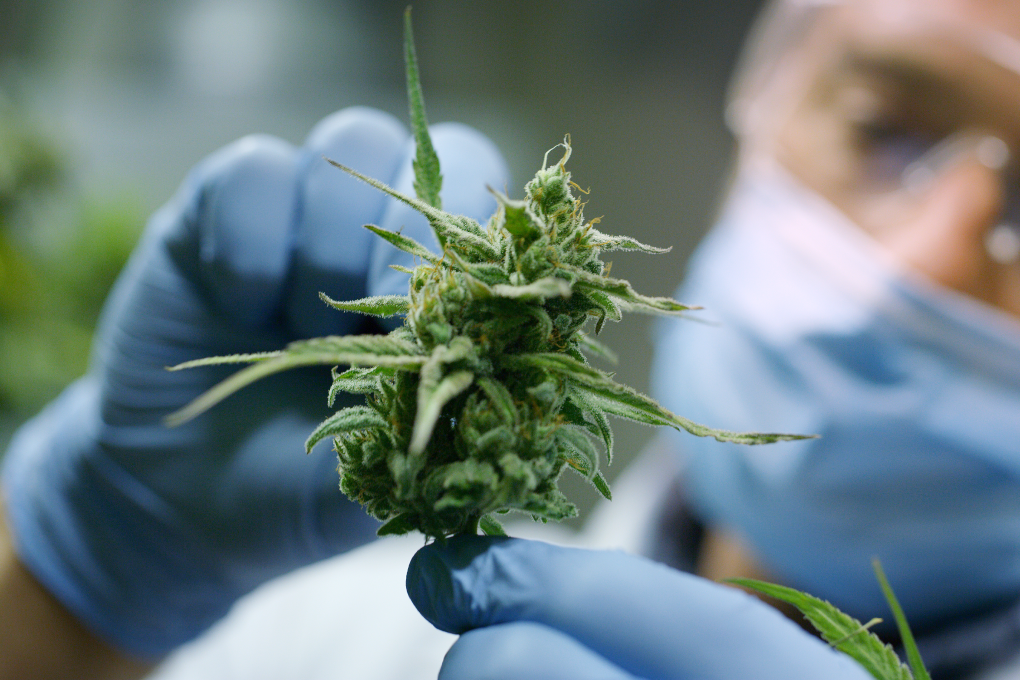
THC and CBD dominate cannabis conversations, but they are only part of the plant's chemistry. Cannabis produces numerous cannabinoids along with terpenes, flavonoids, and other compounds. As laboratory testing becomes more detailed and product labels become more informative, consumers are increasingly encountering abbreviations such as CBG, CBN, CBC, THCV, THCA, and CBDA.
These names can make a product label look more complicated than it needs to be. The key is to understand what the terms describe without turning early scientific findings into promises. Research on lesser-known cannabinoids is expanding, but evidence varies greatly by compound, dose, product, and research question. Laboratory or animal findings should not be presented as established human benefits.
A better way to approach cannabis chemistry is to see each measured compound as one piece of a larger profile. That perspective helps explain why the industry is slowly moving beyond the idea that a single THC percentage can summarize an entire product.
Cannabinoids are a class of chemical compounds associated with the cannabis plant and with biological systems that respond to cannabinoid signaling. Plant-produced cannabinoids are often called phytocannabinoids.
The plant does not simply manufacture large amounts of neutral THC and CBD from the beginning. Many cannabinoids are produced primarily in acidic precursor forms. Heat, time, processing, and storage can change those compounds through chemical reactions such as decarboxylation.
This is why laboratory reports may list both THCA and THC or both CBDA and CBD. The distinction is chemical, not merely a different spelling of the same result.
CBG stands for cannabigerol. Its acidic precursor, CBGA, plays an important role in the plant because biochemical pathways can convert it into precursor forms associated with several better-known cannabinoids.
Mature cannabis often contains relatively small amounts of CBG compared with dominant cannabinoids, although genetics and harvest timing can influence the profile. Breeders and product manufacturers have shown increasing interest in cultivars and formulations designed to contain more CBG.
Researchers are studying CBG in laboratory, animal, and human contexts, but consumers should be cautious when marketing assigns it a guaranteed effect. The presence of CBG on a label is evidence of composition, not proof that a product will produce a particular health outcome.
CBN stands for cannabinol. It is often discussed in relation to older cannabis because THC can degrade and oxidize over time through processes that contribute to CBN formation.
That relationship makes CBN particularly interesting when thinking about storage and product age. It also demonstrates that cannabis chemistry is not frozen at harvest. Light, oxygen, temperature, and time can influence the chemical profile.
CBN is frequently marketed in products associated with nighttime use, but marketing has moved faster than definitive clinical evidence. Consumers should distinguish a product's positioning from conclusions supported by well-controlled human research.
CBC, or cannabichromene, receives much less consumer attention than THC, CBD, CBG, or CBN. Like other phytocannabinoids, it originates through plant biosynthetic pathways and can appear in varying concentrations depending on genetics and development.
Scientists continue to investigate CBC's biological activity. Much of the public discussion, however, relies on early-stage evidence. That makes CBC a useful example of why scientific literacy matters in cannabis: a compound can be genuinely interesting to researchers without being ready for sweeping consumer claims.
Seeing CBC on a laboratory report should encourage curiosity, not certainty about an effect.
THCV stands for tetrahydrocannabivarin. Its name resembles THC because the compounds are chemically related, but differences in molecular structure can affect how they behave.
THCV occurs naturally in some cannabis varieties and has become increasingly visible in specialty products. Research has explored its pharmacology and potential applications, but dose, formulation, and study design matter. Simplified descriptions such as assigning THCV a single lifestyle effect can leave out important scientific uncertainty.
Consumers should be especially skeptical of products marketed with confident weight-control, energy, or medical promises unless those claims are supported by appropriate evidence and permitted by law.
THCA and CBDA are acidic cannabinoids found in the plant. THCA is the precursor associated with THC, while CBDA is associated with CBD. Heating can remove a carboxyl group through decarboxylation, producing the corresponding neutral cannabinoid.
This is why a laboratory report for flower may show substantial THCA even when consumers commonly refer to the product as containing THC. Testing laboratories and regulators may use formulas or reporting conventions to express potential total cannabinoid content.
Understanding precursor forms also helps explain why processing conditions matter. Cannabis chemistry can change during drying, storage, extraction, heating, and product manufacturing.
Scientists have identified many phytocannabinoids and related compounds, but routine commercial testing does not necessarily quantify every one. Laboratories test according to regulatory requirements, validated methods, customer needs, and practical analytical limits.
A label therefore represents selected measurements rather than a complete chemical map of the plant. Two products with the same THC percentage can differ in minor cannabinoids, terpenes, volatile compounds, moisture, age, and many other characteristics.
This chemical complexity is one reason experienced consumers increasingly look beyond a single potency figure.
Terpenes are aromatic compounds found throughout the plant kingdom. In cannabis, they contribute to scent and are an important part of the sensory profile. Common examples include myrcene, limonene, pinene, beta-caryophyllene, and linalool.
Terpenes and cannabinoids are different chemical families. A product can have a detailed terpene profile and a detailed cannabinoid profile, and neither should be confused with the other.
GanjaTrack previously explored why consumers are paying more attention to terpenes. The larger lesson applies here as well: cannabis quality and experience cannot be reduced to one compound.
Flavonoids are plant compounds found in many fruits, vegetables, flowers, and herbs as well as cannabis. They can contribute to pigmentation and other plant functions.
Compared with THC, CBD, and major terpenes, cannabis flavonoids receive relatively little consumer attention. Research is ongoing, and the presence of a flavonoid should not be translated into an unsupported health claim.
Their existence is nevertheless useful for understanding how chemically diverse the plant is. Cannabinoids and terpenes are not the complete story.
The phrase minor cannabinoid usually refers to relative abundance or market prominence, not a scientific ranking of importance. A compound present at a low concentration can still be analytically or biologically interesting.
Likewise, minor does not automatically mean non-intoxicating, safe, therapeutic, or appropriate for every consumer. Each compound has to be evaluated based on evidence rather than the category name.
This is especially important as manufacturers isolate or concentrate compounds that naturally occur in much smaller amounts. A concentrated formulation can create an exposure that is very different from the amount present in ordinary flower.
Studying cannabis is difficult because products vary. Researchers have to define the compound, dose, route of administration, formulation, participant population, comparison group, and outcome being measured.
Evidence from purified CBG, for example, cannot automatically be applied to a flower product containing a small amount of CBG alongside THC, terpenes, and many other compounds. Animal research cannot automatically establish a human clinical effect. An observational association cannot prove causation.
Good cannabis education preserves those distinctions rather than turning every new study into a headline promising a breakthrough.
Regulatory requirements can push more detailed information toward consumers. Ohio's packaging rules effective in September 2026, for example, require specified cannabis plant-material labels to report several cannabinoids, including CBD, CBDA, and THCV, as reflected on the associated Certificate of Analysis, along with at least the top three terpenes by percentage.
That does not mean every state requires the same panel. It does show how cannabis labels can evolve beyond THC alone.
As more data becomes visible, consumers will need better explanations of what those numbers mean and, equally important, what they do not mean.
Consumers who are new to cannabis should be especially cautious with unfamiliar concentrated products and should follow applicable medical guidance when health conditions or medications are involved.
Minor cannabinoids are increasingly isolated or concentrated for manufactured products. That changes how consumers should interpret the word natural. A compound may occur naturally in the plant while a finished product contains it at a concentration or ratio that is uncommon in ordinary flower.
Formulation also affects exposure. Ten milligrams of a compound in an edible cannot be compared casually with a small percentage measured in flower because route of administration, serving size, absorption, and accompanying ingredients differ.
This is another reason cannabinoid education should focus on the actual product rather than attaching a universal effect to an acronym.
THC and CBD will remain important, but cannabis science is increasingly revealing a much larger chemical landscape. CBG, CBN, CBC, THCV, acidic precursors, terpenes, flavonoids, and other compounds give researchers more questions to investigate and give consumers more information to interpret.
The goal should not be to replace THC hype with minor-cannabinoid hype. It should be to become more precise. Some findings are well established, others are preliminary, and many product claims remain ahead of the evidence.
A more mature cannabis marketplace will make room for that uncertainty. The more consumers understand the difference between a laboratory measurement, a research hypothesis, and a proven outcome, the more useful these increasingly detailed labels can become.
(Sources: National Institutes of Health | PubMed | National Center for Complementary and Integrative Health | Ohio Administrative Code)

